

Travel & Confidence
The shop opens at nine. When are we meeting?
A shop notice and a message from a friend both use lúc. Read the words before it to find out what each time is for.
Read the note on the door
The shop is closed. A note on the door says “Mở cửa lúc chín giờ.” On a shop door, mở cửa means “open for business.” Chín giờ means “nine o’clock.” You can jot down “shop opens — 9.”
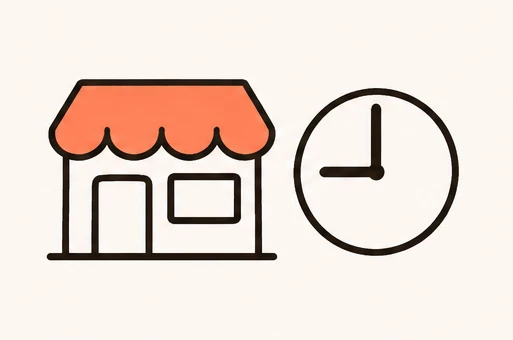
Lúc connects an event to its time. Put a finger after mở cửa and read the two parts in turn. The notice gives the opening time. To find the closing time, you would need another line.
Read what is happening as well as the time
Spot lúc in a message
A friend texts “Hẹn gặp lúc ba giờ.” Hẹn gặp is an arrangement to meet. Ba giờ is three o’clock. In your planner, write “meet at three.”
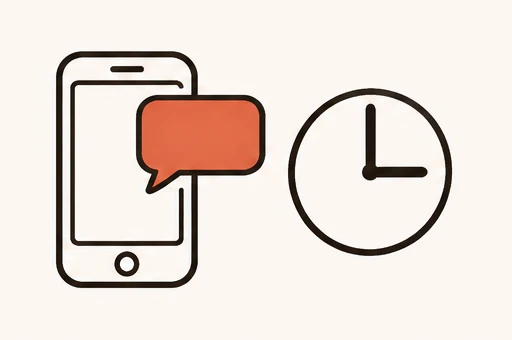
In both sentences, the words after lúc tell you what to put on the clock. Cover them for a moment. Could you still tell which sentence belongs on the shop door and which came from your friend?
Find the day in a separate phrase
Compare “Hôm nay tôi đến.” with “Ngày mai tôi đến.” The speaker is coming today in the first message and tomorrow in the second. Tôi đến stays the same. The words at the beginning tell you which day to mark.
If a friend writes only ba giờ and the conversation has not established a day, you still have a time without a date. The two words alone also leave a.m. and p.m. open.
Put both plans on the same page
Copy the shop notice and your friend’s message onto separate lines in a planner. Label each time with the event it belongs to. When the day is clear from the exchange, add that in the same line.
Key point
In these two notes, read the event before lúc and its time after it. Look to the rest of the exchange for the day and time of day.
Try it
Write “shop opens” and “meet a friend” on two lines. Add the time from the Vietnamese sentence that goes with each.
Try one question
Review the example
Your note says Hẹn gặp lúc ba giờ. What time is the meeting?
Hint Look for the number before giờ, which means “o’clock”.
That’s it! 3 o’clockBa giờ means three o’clock. The note alone doesn’t specify a.m. or p.m.