
Useful Phrases
Two pieces or two kilos? Reading quantities at a Vietnamese market
Two pieces of fruit or two kilos? Read past the number to find the unit, then see what the price tag actually tells you.
First decide what the number tells you
The sign above a basket of fruit gives a price. Your order tells the seller how much fruit you want. Suppose you pick a basket and hold up two fingers.
Look for hai, meaning two. The word beside it tells you what the buyer is counting.
After hai, read the unit being counted
Point to a basket of fruit and say “Cho tôi hai trái.” You’re asking for two pieces from that basket. The number is hai; the fruit is counted with trái.
In the north you’ll often hear “Cho tôi hai quả.” The word after hai changes from trái to quả, but the seller still picks out two pieces of fruit.
You can order by count even when the price is by weight
Distinguish counting objects from weighing them
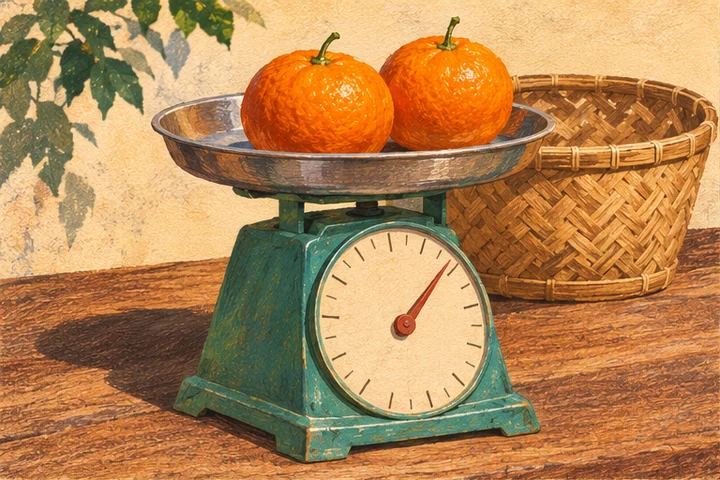
For two pieces of fruit, you might say hai trái in the south or hai quả in the north. If you want the seller to weigh out two kilos, you might say hai ký in the south or hai cân in the north. Listen to the word after hai to tell what the seller will do.
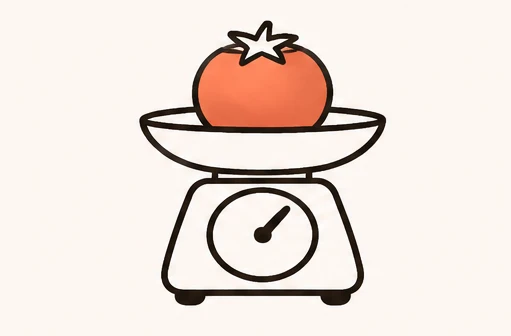
Cái is a general classifier used when counting many ordinary objects. For this fruit stall, keep two useful requests side by side: fruit picked out by the piece and fruit weighed by the kilo.
Do not fill in an item count from a price tag
A number resembling a price beside fruit does not, by itself, tell you whether it is a price per piece or by weight. Check the unit on the sign and the exchange in that shop. This is a separate check from choosing two pieces in front of you.
Split what you know into two parts: I want two, and I still need to know what those two will cost. Rather than memorising an amount while its unit remains unclear, connect the product, count or weight, and price one at a time. That makes the point needing a question easier to find.
Give your shopping list two columns
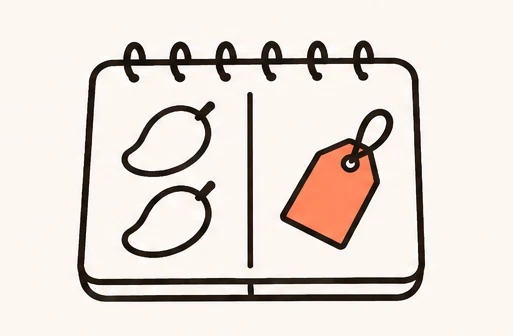
Label the left column “what I want” and the right one “price.” You want two pieces of fruit. Fill in the left side in Vietnamese. When you see a price tag, record the amount on the right and leave room to note what it buys.
Key point
Read the object and unit as well as the number. Check the quantity you want separately from its price.
Try it
Read Cho tôi hai trái. and Cho tôi hai quả. Which word in both tells the seller how many pieces of fruit you want?
Try one question
Review the example
You point at the mandarins and say Cho tôi hai trái. What did you specify?
Hint Look at the word after hai. Is it for weight or for counting pieces of fruit?
That’s it! Two piecesHai trái asks for two pieces of fruit. Hai quả is a northern example with the same count. Ordering by weight would require a weight unit.