
Useful Phrases
Hands and arms, feet and legs: read Vietnamese body words by their scope
Where does tay end and bàn tay begin? Compare the Vietnamese words for the whole limb and for the hand or foot at its end.
Start with positions on your own face
Start with your head (đầu) and your face (mặt). Point to your eyes (mắt), nose (mũi) and mouth (miệng), then to your ears (tai).
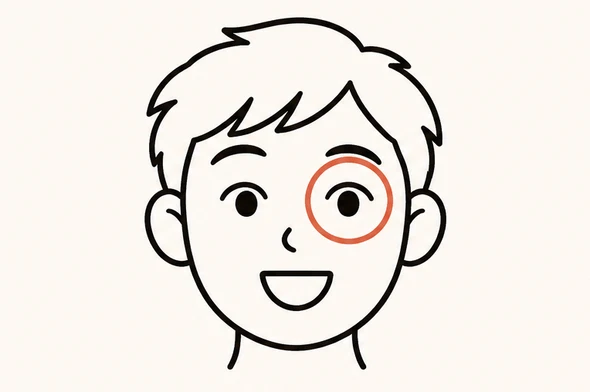
Look closely at mắt and mặt. Touch an eye as you read mắt, then move your hand round your face as you read mặt.
tay and bàn tay do not always cover the same area
The word tay can mean the arm or the hand. Bàn tay is more precise: it means the hand from the wrist onwards. If someone says tay while pointing, follow the gesture.
Hold one hand open. The whole hand is bàn tay, the palm is lòng bàn tay, and a finger is ngón tay.
The hand and the palm cover different areas
Compare the whole limb and its end with chân and bàn chân
The word chân can mean leg or foot. In a description of long legs, you'll picture the whole limb. When someone slips a foot into a shoe, your attention goes to the part below the ankle, the bàn chân.
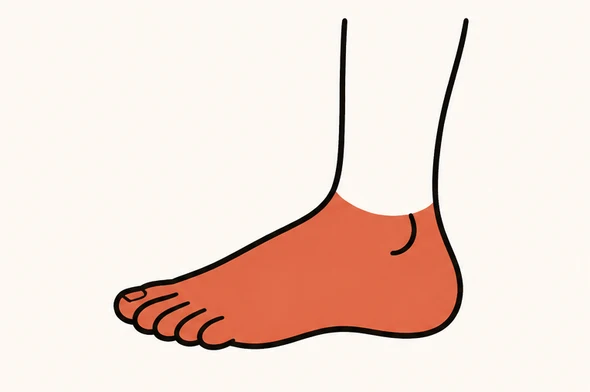
Now bend your knee. Its name is đầu gối. Point to it, then to your foot, as you say the two words.
Check whether the word refers to a body part
A word you use for your body may point to something else in another sentence. Mặt can mean your face or the surface of an object. What is the speaker pointing to?
In a dictionary entry with several senses, read the example beside each sense. A sentence about a person's nose will help you find the meaning of mũi you need here.
Trace the outline of your hand
Lay one hand on a sheet of paper and trace it. From tay, bàn tay and lòng bàn tay, choose a label for the whole outline from the wrist and another for the palm inside it. Write each label by the part you mean.
Key point
Even when translations resemble each other, check the area intended. Do not mechanically replace a broader word with a narrower one.
Try it
Point first to your face, then to an eye. Which word, mặt or mắt, goes with each gesture?
Try one question
Review the example
Think of the whole hand a glove covers, then the foot that fits inside a shoe. Which pair names them in that order?
Hint Start with the part a glove covers. Then picture what goes in a shoe.
That’s it! bàn tay → bàn chânBàn tay is the hand, fingers included. Bàn chân is the foot below the ankle. Lòng bàn tay refers specifically to the palm.